
POSITIONING
Aim at what you own
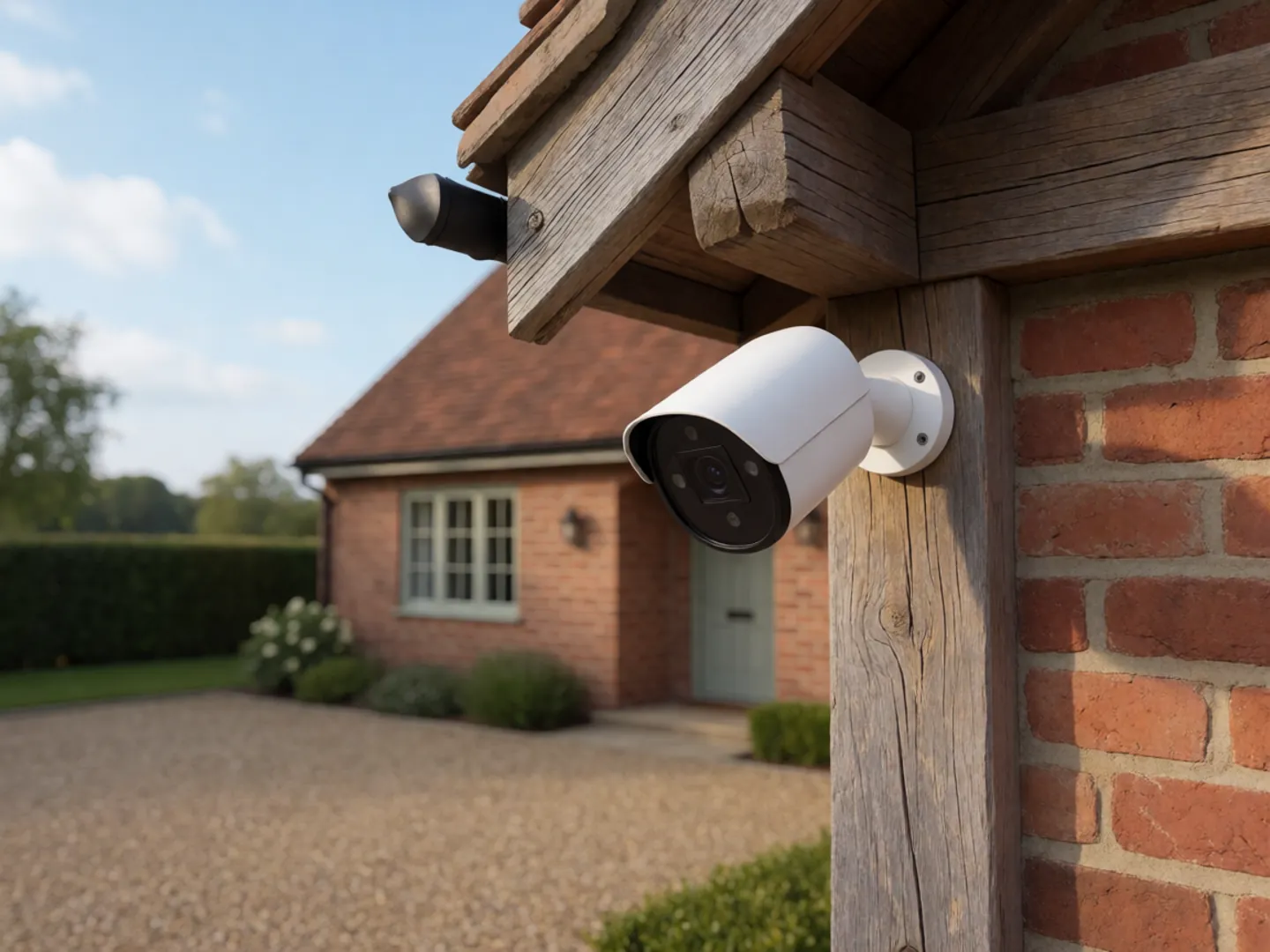
The ICO says owners should, where possible, position cameras to capture only their own property. Privacy filters can blur out parts of the picture that you don't need.
Check your view foldercam
WHAT THE GUIDANCE SAYS
Home cameras can help protect a property.
But once a camera or smart doorbell records beyond your boundary, data protection law applies. The ICO and GOV.UK guidance set out simple steps to stay on the right side of it, and of your neighbours.
1 MONTH to answer a footage request
Check your viewTHE SHORT ANSWER
Filming only your own property keeps it simple.
Filming beyond it brings duties under data protection law.
POSITIONING
The ICO says owners should, where possible, position cameras to capture only their own property. Privacy filters can blur out parts of the picture that you don't need.
Check your viewDOORBELLS
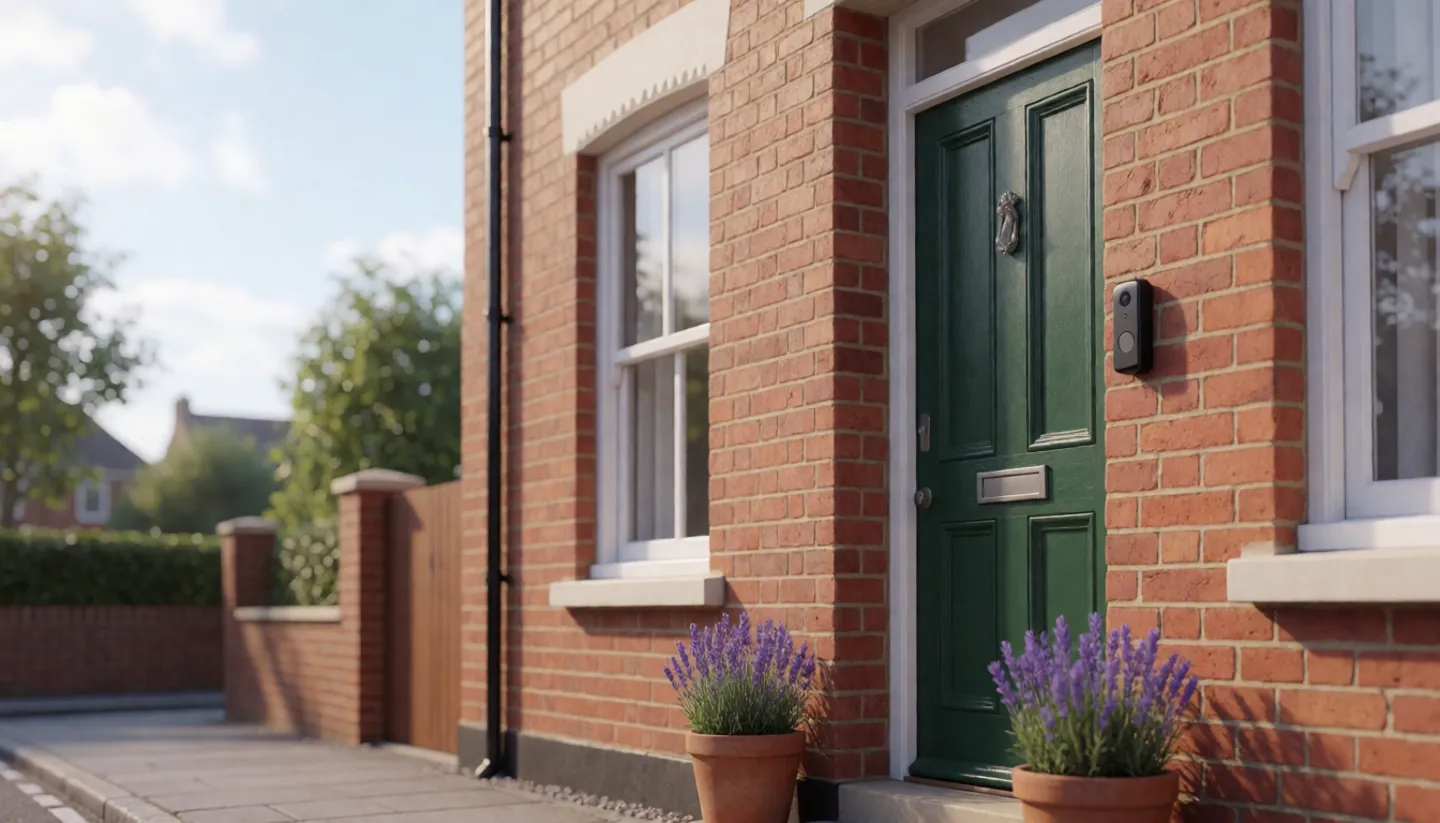
GOV.UK guidance covers video-equipped doorbells as well as fixed cameras. If they capture people beyond your boundary, UK GDPR and the Data Protection Act 2018 apply.
What to doNEIGHBOURS
If you're worried about a neighbour's camera, the ICO suggests starting by talking or writing to the owner: they may simply reposition it.
If you're filmed
IF YOUR CAMERA SEES BEYOND YOUR BOUNDARY
The ICO lists these as things a CCTV owner must do once recording goes beyond the property boundary.
Think about the area to be covered, and whether you need images, audio or both.
Install signage showing that CCTV is in operation, and consider telling your neighbours.
Keep recordings where only people who need them can see them, with the date and time set correctly.
Delete footage regularly, automatically, or both, and answer requests from people who appear in it.
TWO NUMBERS WORTH KNOWING
How long you usually have to answer someone you filmed,
and the principles public bodies must follow.
1 calendar month
Usual time to answer a request for footage
Data protection law usually requires a CCTV owner to respond to a request for personal information within one calendar month, when the camera films beyond the owner's boundary.
SUBJECT ACCESS · ICO
12 principles
Guiding principles in the Surveillance Camera Code
The Home Secretary's code applies to police forces, local authorities and parish councils in England and Wales. Home owners are encouraged to follow it voluntarily.
PUBLIC CAMERAS · GOV.UK
GOV.UK guidance notes that the ICO receives many complaints from neighbours and others who are concerned that CCTV systems are being used to spy on them.
A QUICK VIEW CHECK
Pick what falls inside your camera's view. The bar shows how much data protection law expects of you as the owner.
Based on ICO guidance on home CCTV and GOV.UK guidance on domestic CCTV. The ICO says its guidance is under review after the Data (Use and Access) Act. Not legal advice.
IF YOU'RE THE ONE BEING FILMED
The ICO suggests explaining your concerns, asking why the camera is there, whether privacy blockers are used, and to see what it records. It publishes a template letter to help.
In a wider neighbour dispute, government guidance suggests talking first, then mediation, and the police only for violence or harassment. The ICO notes police are unlikely to treat CCTV alone as harassment without other misconduct.
Questions
Yes. GOV.UK guidance covers video doorbells as well as CCTV. If a camera captures people beyond your property boundary, data protection law applies and you have duties as the owner.
The ICO says data protection law applies when home CCTV captures beyond the owner's own property, such as someone else's property, a public area or a communal space. The owner must then follow rules such as signage, secure storage and answering requests.
Yes, where data protection law applies. The ICO says owners usually have to respond to a request for personal information within one calendar month.
The ICO suggests talking or writing to the owner first, explaining your concerns and asking if they can reposition the camera or use privacy blockers. It provides a template letter.
The NCSC advises changing any default password, for example to three random words, keeping the camera updated, and turning off remote viewing if you don't need it. It also suggests considering switching off UPnP and port forwarding on your router, which criminals can exploit to reach devices such as cameras, though this may stop some apps and devices from working.
Rarely. The ICO says a home CCTV owner will often have a legitimate reason, such as protecting themselves, their family and their property, so consent is not needed, but they must be able to show that their interests outweigh the intrusion into other people's privacy. You can still object: the owner should then give a very strong reason, such as crime prevention, to carry on, or stop recording or reposition the camera.
In most cases the ICO says it cannot or will not remove a camera, force an owner to reposition or remove it, retrieve footage on your behalf, force an owner to delete recordings of you, or take court action for you. It says it is highly unlikely to consider enforcement action against a home CCTV owner fair or balanced, which is why it suggests writing to the owner first.
GOV.UK guidance says recordings should be used only for the purpose the system was installed for, such as protecting your property, and that it will not be appropriate to share them on social media sites. In some circumstances the police may use footage as evidence; check with your installer or local police that yours can be used that way.
Updated
ABOUT THIS NAME
foldercam.com is part of the DoodleSale portfolio. It isn't in an auction right now, but you can ask about leasing it.

